Ever wonder why you feel a sudden urge to whip up a gourmet meal in a friend’s kitchen, but in your own, you can barely muster the energy to boil pasta? It’s not just you. Honestly, it’s not even just about your cooking skills. The layout of your kitchen—the actual physical space—plays a huge, often subconscious, role in your motivation to cook. It’s a dance between your mind and the environment.
Think of it like this: a cluttered, chaotic countertop is a visual to-do list screaming at you. A dark, cramped corner feels isolating. But a well-organized, flowing space? It’s an invitation. It whispers, “Come on in, let’s create something.” Let’s dive into how the psychology of kitchen layout directly fuels—or completely drains—your cooking motivation.
The “Kitchen Triangle” is More Than Just Geometry
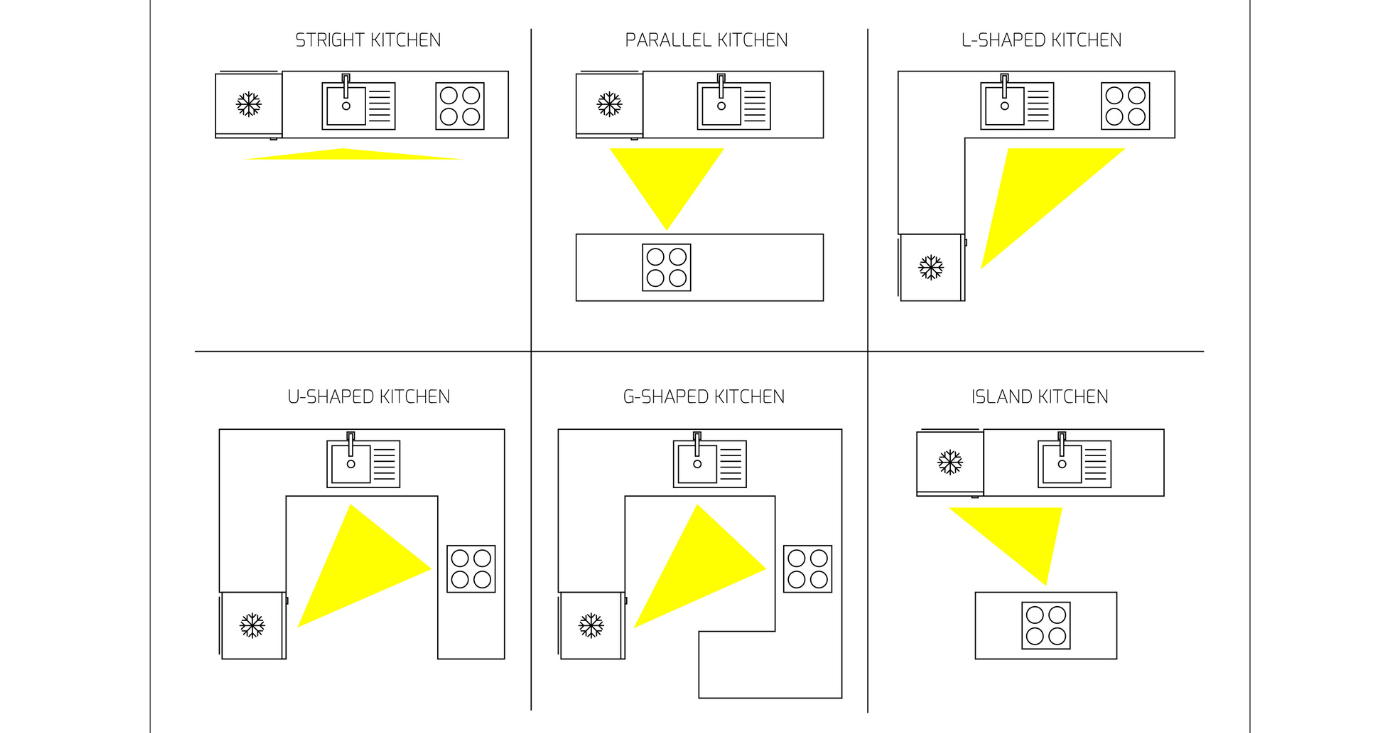
You’ve probably heard of the work triangle: the imaginary line connecting your sink, stove, and refrigerator. It’s classic kitchen design 101. But its power is deeply psychological. A efficient triangle minimizes pointless steps. It creates a rhythm. You glide from fridge to prep area to stove without thinking, like a well-rehearsed dance.
When that triangle is broken—say, the trash is across the room from the prep sink, or you have to walk around an island to get from the stove to the fridge—friction builds. That friction isn’t just physical. It’s mental. Each extra step is a tiny decision, a micro-frustration. Over the course of preparing a meal, these add up to what psychologists call “cognitive load.” Your brain gets tired of the inefficiency before you even taste the food. The result? You’re less likely to start cooking in the first place.
Flow State vs. Fight-or-Flight in the Kitchen
A good layout can induce a “flow state”—that magical zone where you lose track of time and are fully immersed in the task. Everything is within reach. The process feels seamless. Conversely, a bad layout can trigger a low-grade stress response. Can’t find the spatula as the garlic burns? That’s a mini-crisis. A kitchen that constantly creates these mini-crises trains your brain to associate cooking with stress. And the brain, clever thing, will avoid what stresses it out. Hello, food delivery app.
Key Layout Elements That Mess With Your Mind
It’s not just about the big triangle. Smaller details have an outsized impact on your cooking motivation.
1. Countertop Chaos: The Visual Noise Effect
Clutter is visual noise. It competes for your brain’s attention. A counter covered in small appliances, mail, and random stuff signals “there’s no room to work here,” even if there physically is. Clearing just one clear, generous prep zone—a “landing pad”—makes the idea of chopping vegetables feel possible, not like an archaeological dig.
2. The Social Kitchen vs. The Cook’s Exile
Humans are social creatures. The popular open-concept kitchen didn’t just happen for aesthetic reasons. A layout that isolates the cook (a closed-off galley facing a wall) can feel lonely, turning meal prep into a chore. An open layout that allows the cook to interact with family or guests transforms cooking into a social, participatory event. That’s a huge motivator. You’re not just feeding people; you’re connecting.
3. The “See It, Use It” Principle of Storage
Out of sight, out of mind—it’s a real phenomenon. If your healthy grains and spices are buried in a deep cabinet, you’ll default to the same three ingredients you always use. Open shelving (for pretty items you use often) or glass-front cabinets can subconsciously remind you of what you have, sparking creativity. But beware: this only works if you’re naturally tidy. For some, open shelves just become another source of visual clutter anxiety.
Design Tweaks to Boost Your Cooking Mojo
You don’t need a full renovation. Small, psychologically-informed changes can reignite your desire to cook.
| Pain Point | Psychological Effect | Simple Fix |
| Always searching for tools | Creates frustration & breaks flow | Implement a “first-order” storage system: keep daily-use tools (wooden spoon, spatula, chef’s knife) in a crock or drawer right next to the stove. |
| Dark, gloomy workspace | Lowers energy & mood; feels uninspiring | Add under-cabinet LED lighting to brighten countertops. It’s task lighting that makes everything look—and feel—more vibrant. |
| No dedicated prep zone | Makes starting feel like a big project | Claim one clear counter space. Even if it’s small, keep it sacred. A clear space equals a clear mind ready to create. |
| Awkward appliance access | Adds mental “hassle factor” to recipes | Store the blender or food processor on the counter if you use it weekly. If not, store it away. Honestly, assess your real habits. |
The Personality of Your Kitchen Layout
Here’s the deal: the “perfect” layout is also personal. An extrovert who loves entertaining might thrive with a large island where people can gather. An introvert or a serious recipe-follower might prefer a more enclosed, focused galley to minimize distractions. There’s no one-size-fits-all. The goal is to align the space with your cooking style and psychological needs. Is it a social hub, a lab for experimentation, or a peaceful, solo retreat? Your layout should answer that question.
And let’s be real—our needs change. The pandemic taught many of us that the kitchen is a multi-purpose space: office, classroom, and restaurant. That flexibility, that ability for a space to adapt, is now a huge part of its psychological appeal. A mobile kitchen island or a fold-down table can change the function—and the feeling—in an instant.
Cooking Motivation Starts Before You Turn On the Stove
Ultimately, the psychology of kitchen layout teaches us that motivation isn’t some mysterious internal force. It’s often a product of our environment. A kitchen that reduces friction, invites you in, and supports your process doesn’t just make cooking easier—it makes it more appealing on a fundamental level.
So, take a look at your kitchen. Not with a designer’s eye, but with a psychologist’s. Where does it create stress? Where does it foster joy? Sometimes, moving a knife block or adding a light can do more for your home-cooked meal frequency than any new cookbook. Your kitchen isn’t just a room; it’s a partner in your culinary life. Make it a good one.