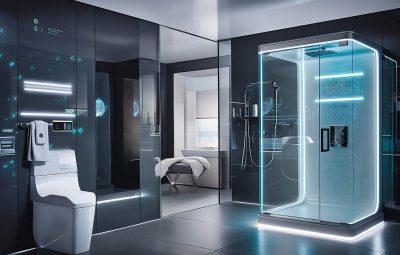
Let’s be honest — most bathrooms are a lighting disaster. That single overhead fixture? It’s a crime scene. Harsh, shadowy, and completely oblivious to how your body actually works. But here’s the thing: your bathroom might be the most important room in the house for your circadian rhythm. Yeah, really. Think about it — you start and end your day there. That first blast of light in the morning? It sets the tone for your entire biological clock. And that dim, blue-lit mirror selfie at 10 PM? It’s basically telling your brain it’s noon. So let’s fix this. No jargon, no fluff — just real talk about lighting your bathroom like your sleep depends on it. Because, well… it kinda does.
What Even Is Circadian Rhythm? (And Why Your Bathroom Matters)
Your circadian rhythm is your body’s internal clock. It’s a 24-hour cycle that tells you when to feel alert and when to feel sleepy. Light is the main cue — or zeitgeber, if you wanna get fancy. When your eyes see bright, blue-enriched light in the morning, your brain stops producing melatonin (the sleep hormone) and kicks cortisol into gear. You wake up. You feel alive. Conversely, warm, dim light in the evening signals that it’s time to wind down. Problem is, most bathroom fixtures are designed for tasks — shaving, makeup, flossing — not biology. They blast the same cool white light at 6 AM and 10 PM. That’s like drinking espresso right before bed. Not ideal.
Here’s the deal: your bathroom is a transition zone. It’s where you go from groggy to awake, or from wired to relaxed. So the lighting needs to shift, just like your body does. And no, you don’t need a smart home overhaul to make it happen. You just need a little strategy.
The Science of Light Temperature (Kelvin, Not Fahrenheit)
Light color is measured in Kelvin (K). Lower numbers = warmer, yellower light. Higher numbers = cooler, bluer light. Here’s the cheat sheet:
| Kelvin Range | Vibe | Best For |
|---|---|---|
| 2000K – 3000K | Warm, candle-like | Evening wind-down, baths |
| 3100K – 4500K | Neutral, natural white | General tasks, makeup |
| 4600K – 6500K | Cool, blue-white | Morning alertness, shaving |
For circadian-friendly bathrooms, you want two distinct zones: a cool morning zone (around 5000K) and a warm evening zone (around 2700K). And yeah, you can mix them in the same room. It’s not weird — it’s smart.
Morning Routine: Blast the Blue (Strategically)
Picture this: your alarm goes off. You stumble into the bathroom, flip the switch, and — bam — you’re hit with a soft, amber glow. Feels cozy, sure. But your brain? It’s still half-asleep. That’s because warm light doesn’t suppress melatonin effectively. You need a cool, blue-enriched kick to signal morning.
But here’s the catch — you don’t want to blast blue light directly in your eyes from a bare bulb. That’s just painful. Instead, use indirect lighting. Think: LED strips behind the mirror, or a frosted sconce that bounces light off the wall. The goal is to flood the room with cool, even light — not to blind you. I personally use a 5000K LED strip behind my medicine cabinet. It’s like a sunrise, but faster. And it wakes me up without that jolt of caffeine.
Task Lighting for Morning Precision
You still need to see your face — for shaving, makeup, or just checking if that zit is still there. That’s where task lighting comes in. Install two sconces on either side of the mirror, at eye level. This eliminates shadows on your face. Use bulbs in the 4000K–5000K range. It’s bright enough for detail work, but not so blue that it feels like an operating room. Honestly, it’s a game-changer for morning grogginess.
Pro tip: dimmable bulbs are your friend. You can crank them up for that morning wake-up call, then dial them down if you’re still half-asleep. Just don’t forget to turn them up again — or you’ll be late for work.
Evening Wind-Down: Warm, Dim, and Deliberate
Now, let’s talk about the other end of the day. You’re brushing your teeth, maybe washing your face, and your body is trying to produce melatonin. But that 5000K vanity light? It’s screaming “WAKE UP!” at your pineal gland. Not cool. For evening, you want warm light — 2700K or lower. And dim it. Like, really dim. Think candlelight, but functional.
One trick: use a separate circuit or smart bulb for your evening zone. I have a single sconce near the toilet (yes, really) that runs at 2200K. It’s just enough light to see without jolting me awake. And for the main vanity? I swap to a warm, dimmable LED strip. It feels like a spa, not a interrogation room.
Red Light: The Secret Weapon
Okay, this sounds a bit sci-fi, but hear me out. Red light (around 620–750nm) has the least impact on melatonin production. Some people install a red bulb in their bathroom for late-night visits. It’s not great for makeup application — you’ll look like a vampire — but for a quick middle-of-the-night trip? It’s perfect. You won’t disrupt your sleep cycle. I’ve got a small red LED nightlight in my bathroom. It’s subtle, but it works. And no, it doesn’t make the room look like a darkroom — it’s more of a warm, rosy glow.
Layering Light: The Three-Zone Approach
Here’s where it gets practical. You don’t need to rip out your entire bathroom. You just need to layer light. Think of it like this:
- Ambient light — the ceiling fixture or recessed lights. Use dimmable, tunable white bulbs (2700K–5000K).
- Task light — sconces or mirror lights. Keep these at 4000K for morning, or swap to warm bulbs for evening.
- Accent light — a small nightlight or toe-kick strip. Use warm or red for nighttime.
You can control each zone with a smart switch or just separate dimmers. Honestly, it’s easier than it sounds. And once you have it set up, you’ll wonder how you ever lived without it. Your body will thank you — no more groggy mornings or restless nights.
What About Color Rendering? (CRI Matters)
You might see “CRI” on bulb packages. It stands for Color Rendering Index — basically, how accurate colors look under the light. For bathrooms, aim for CRI 90 or above. Why? Because if you’re applying makeup or checking your skin, you want true colors. A low CRI bulb can make you look sallow or washed out. And that’s just depressing. High CRI bulbs also feel more natural, which helps your brain relax. It’s a small detail, but it matters.
Smart Bulbs vs. Dedicated Fixtures: Which Is Better?
You’ve got two main paths here. Smart bulbs (like Philips Hue or LIFX) let you change color temperature and brightness from your phone. They’re flexible — you can set a “morning” scene and an “evening” scene. But they’re also pricier, and you need a hub or Wi-Fi for some models. Dedicated fixtures with tunable white LEDs are more permanent. They’re built into the fixture, so you don’t have to fiddle with bulbs. Both work. I lean toward smart bulbs for renters or DIYers, and dedicated fixtures for permanent setups. Either way, the key is tunability — you need to shift from cool to warm.
One more thing: dimmers are non-negotiable. Even with smart bulbs, a physical dimmer gives you instant control. And it’s cheaper than replacing all your bulbs. Just make sure your bulbs are dimmable — not all LEDs are.
Common Mistakes (And How to Avoid Them)
Let’s be real — most people screw this up. Here’s what I see all the time:
- One overhead fixture only — creates harsh shadows and uneven light. Add sconces or a mirror light.
- Using cool light at night — that 5000K bulb is ruining your sleep. Swap it for 2700K after sunset.
- Ignoring dimmers — you need to adjust brightness, not just color. A dimmer is a cheap fix.
- Forgetting about the shower — a warm, dimmable shower light can make evening baths feel luxurious. Or a cool one for morning wake-ups.
- Overlooking nightlights — a tiny red or warm LED near the toilet can save your sleep cycle during midnight trips.
Honestly, the biggest mistake? Not thinking about the time of day. Your bathroom lighting should change, just like your mood. It’s not a set-it-and-forget-it thing.
Putting It All Together: A Sample Setup
Okay, let’s imagine a typical bathroom. You’ve got a vanity, a mirror, and a shower. Here’s a circadian-friendly layout:
- Vanity sconces (x2) — 4000K dimmable LEDs, CRI 90+. Use for morning tasks.
- Ceiling recessed light — tunable white (2700K–5000K), dimmable. Set to cool in the AM, warm in the PM.
- Mirror strip light — 2700K dimmable LED strip behind the mirror. Use