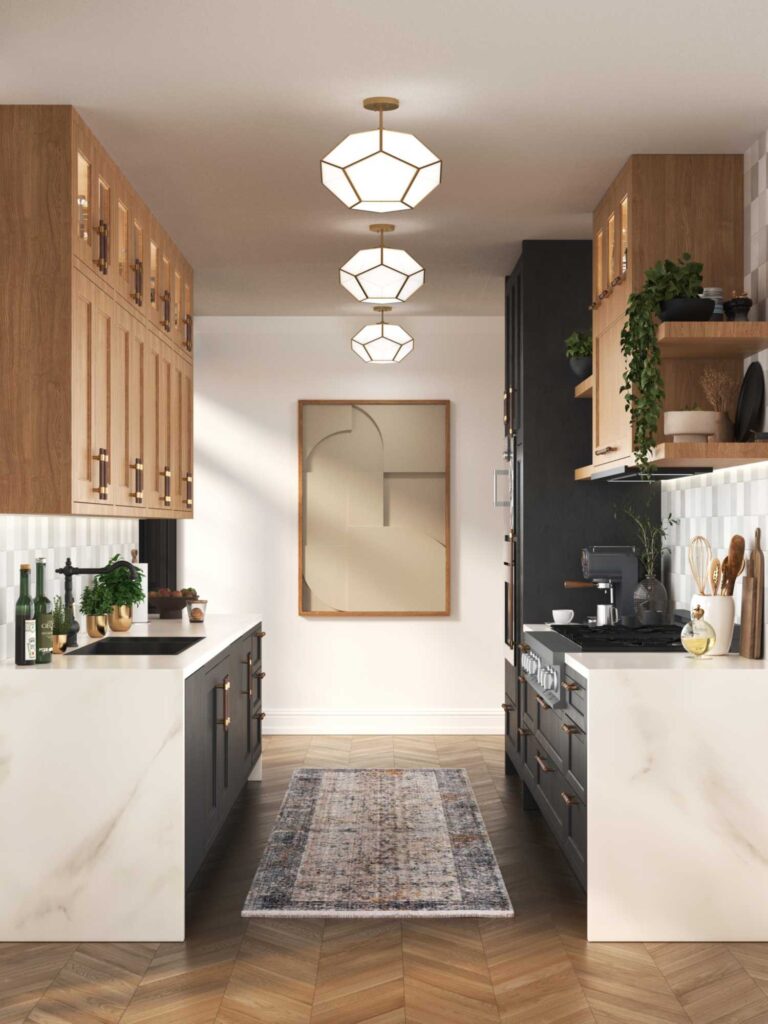
Let’s be honest—kitchen lighting is one of those things you don’t think about until you’re squinting at a recipe, or worse, chopping an onion in your own shadow. It’s easy to just slap a single overhead fixture in the middle of the ceiling and call it a day. But here’s the thing: a great kitchen needs two kinds of light—task lighting for the work, and ambient lighting for the soul. And getting that balance right? Well, it’s part science, part art, and a little bit of trial and error. Let’s dive in.
Why One Light Source Just Won’t Cut It
You’ve probably walked into a kitchen that feels flat—like a hospital break room. That’s the curse of relying on a single overhead light. It creates harsh shadows, washes out colors, and honestly makes even the coziest space feel… cold. The problem? Our eyes need contrast and layers to feel comfortable. In fact, lighting designers often talk about the “layering” principle: ambient, task, and accent. For kitchens, task and ambiance are the dynamic duo.
Think of it like this: ambient light is the background music, and task light is the lead singer. You need both to make the song work. Without task lighting, you’re fumbling in the dark. Without ambiance, you’re in a interrogation room. So yeah—you really do need both.
Task Lighting: Where Precision Meets Practicality
Task lighting is the unsung hero of kitchen design. It’s the light that lands exactly where you need it—on the countertop, over the stove, above the sink. And it’s not just about brightness. It’s about placement, color temperature, and even the angle of the beam.
Here’s a quick breakdown of the most common task lighting zones:
- Under-cabinet lights — These are probably the most popular. They eliminate shadows on your countertops. LED strips or puck lights work great. Just make sure they’re dimmable. You’ll thank me later.
- Pendant lights over islands — Perfect for prep areas. But keep them 30 to 36 inches above the counter. Any higher and they’re just decoration. Any lower and you’re bumping your head.
- Range hood lights — Don’t overlook these. A good range hood with built-in LEDs makes cooking at night so much easier. Plus, it’s a safety thing—no more guessing if that chicken is done.
- Track lighting — Flexible and underrated. You can aim individual heads exactly where you need them. Great for odd-shaped kitchens.
One thing people forget: the color temperature. For task lighting, you want something in the 3000K to 4000K range. That’s a neutral white—not too yellow, not too blue. It mimics natural daylight without feeling sterile. And honestly, it makes chopping veggies way less of a guessing game.
Ambient Lighting: Setting the Mood Without Sacrificing Function
Alright, so task lighting handles the work. But ambiance? That’s where the kitchen becomes a room you actually want to hang out in. Ambient light is the soft, even glow that fills the space—no harsh shadows, no glaring spots. It’s the light you use when you’re not cooking. When you’re sipping coffee at 6 AM or chatting with friends over wine.
Common sources for ambient light include:
- Recessed ceiling lights — They’re the workhorses. But don’t just scatter them randomly. Place them in a grid, about 4 to 6 feet apart, for even coverage.
- Flush-mount or semi-flush fixtures — These add a bit of style while spreading light upward and downward. Great for low ceilings.
- Dimmers — Honestly, this is non-negotiable. A dimmer switch lets you go from bright and alert to soft and cozy with a twist. It’s the single cheapest way to improve your kitchen’s mood.
Here’s a little secret: ambient light doesn’t have to come from the ceiling. Wall sconces, toe-kick lighting (yes, under the cabinets near the floor), even a well-placed floor lamp in a kitchen nook—all of these can contribute to the overall glow. The goal is to avoid a single, glaring source.
Bridging Task and Ambiance: The Art of Layering
So how do you mix them without creating a mess? It’s about zones and controls. Think of your kitchen as a stage. Each area—prep zone, cooking zone, dining zone—needs its own lighting personality. And you need to be able to adjust them independently.
For example: you might have recessed lights on a dimmer for general ambient light. Then under-cabinet lights on a separate switch for task work. And maybe a pendant over the island on yet another dimmer. That way, you can have all three on for a big dinner prep, or just the pendants on low for a late-night snack. It’s flexible. It’s smart. It’s… well, it’s just good design.
Pro tip: Use smart bulbs or smart switches. Being able to control your kitchen lights from your phone—or with a voice command—isn’t just a gimmick. It’s actually handy when your hands are covered in dough.
Common Mistakes People Make (And How to Avoid Them)
I’ve seen a lot of kitchens. And I’ve seen the same mistakes over and over. Let’s save you some headache.
- Too much overhead light, not enough task light. That big fixture in the middle of the ceiling? It casts shadows on your work surface. Your body blocks the light. Fix it with under-cabinet strips.
- Ignoring the island. An island without dedicated lighting feels like a stage without a spotlight. Even a single pendant makes a difference.
- Forgetting about the sink. The sink is a task zone too. A small pendant or a recessed light directly above it saves your eyes during dish duty.
- Using only cool white bulbs everywhere. That’s fine for task areas, but for ambiance? Go warmer. 2700K to 3000K for the ambient layer. It’s cozier.
A Quick Reference Table: Light Types and Best Uses
| Light Type | Best For | Color Temp (K) | Dimmable? |
|---|---|---|---|
| Under-cabinet LED | Countertop prep | 3000–4000 | Yes (recommended) |
| Pendant lights | Island or sink | 2700–3500 | Yes |
| Recessed ceiling | General ambient | 2700–3000 | Yes |
| Track lighting | Flexible task zones | 3000–4000 | Yes |
| Wall sconces | Ambient accent | 2700–3000 | Optional |
That table is a cheat sheet, honestly. Keep it handy when you’re shopping for bulbs or fixtures. It’ll save you from buying that super-bright 5000K LED that makes your kitchen look like a surgical suite.
Trends Worth Noticing (But Don’t Overthink It)
Right now, people are loving warm brass fixtures and matte black pendants. They add texture. Also, linear suspension lights—long, narrow fixtures over islands—are huge. They spread light evenly, unlike a single round pendant that leaves dark edges.
Another trend? Integrated LED strips inside glass-front cabinets. It’s a subtle way to add ambiance without cluttering the ceiling. And it makes your dishes look like they’re in a museum. In a good way.
But here’s my honest take: trends come and go. What matters is that your kitchen feels right to you. If you love a vintage brass chandelier over your island, go for it. Just make sure it’s on a dimmer and positioned correctly.
Putting It All Together: A Simple Workflow
If you’re starting from scratch or renovating, here’s a rough order of operations:
- Map your zones — Prep, cook, clean, eat. Each zone gets its own light source.
- Choose your ambient layer first — Recessed lights or a central fixture. Get the base coverage.
- Add task lights — Under-cabinet strips, pendants, track heads. Focus on shadow elimination.
- Layer in accents — Toe-kick lights, cabinet interior lights, or a statement fixture.
- Install dimmers everywhere — Seriously. Every single switch should be dimmable.
And test it at night. Walk around. Cook something. See where the shadows fall. Adjust as needed. It’s your kitchen—you’ll know when it feels right.
The Final Thought (No Sales Pitch)
Kitchen lighting isn’t about impressing guests—though it will. It’s about making your daily life easier and more pleasant. It’s about not squinting at a recipe. It’s about feeling calm when you walk in at 7 PM after a long day. Task and ambiance aren’t competing ideas; they’re partners. Get them working together, and your kitchen becomes more than a room—it becomes a place you actually want to be.
So take your time. Play with the layers. And don’t be afraid to swap a bulb or two until it clicks. Because good light? It changes everything.